
Friday, June 5, 2015

Thursday, June 4, 2015

Monday, June 1, 2015
Unbreakable Kimmy Schmidt Season 1 Finale

writers: Robert Carlock, Sam Means
director: Tristram Shapeero
Tuesday, May 26, 2015

Twin Peaks Fire Walk With Me

"Yet even Lynch has a hard time getting the balance right. The film ends with a scene of Laura, now in the world beyond, weeping at the sight of a guardian angel resembling the one who earlier disappeared from a painting of children being watched over by a protective spirit. That disappearance happened at the same moment Laura realized nobody was protecting her. It’s a great example of Lynch’s ability to find power in banal, even kitschy imagery. But that scene arrives after images of a mouth devouring that supernatural creamed corn and a monkey saying “Judy,” the latter harkening back to an earlier moment in which the quickly reappearing and disappearing Agent Jeffries (David Bowie) announced he would not be talking about Judy. Is Lynch dropping a reference to be picked up in a sequel never to be made? Getting in one last joke by offering a cryptic clue never to be answered? Is the film just Lil, dancing before us with a sour face, and making us stupid trying to decipher it? Those looking for answers got only years of silence in return." -Keith Phipps
Thursday, May 21, 2015
Frances Ha

After spending the better part of a career making movies about faltering misanthropes, Noah Baumbach delivered the most upbeat film of his career with Frances Ha, thanks in large part to Greta Gerwig, who co-wrote and stars as a happy-go-lucky New Yorker struggling to master basic life skills. Over the past half-decade—heck, over the past two decades—American independent cinema has been overstocked with poignant comedies about quirky arrested adolescents, but Gerwig turns her Frances into more than just a collection of tics and flaws. She’s like everyone’s college best friend: a funny, chatty person whom everyone pities a little, though not enough to keep helping her out. Baumbach adjusts his style to fit his star, making a movie that feels like he just followed Gerwig’s Frances around the city (and elsewhere) for a year, so he could keep cutting to quick lines like, “I tried to make a frittata, but it’s really more of a scramble”— amusing fragments of dialogue that define the character. -Noel Murray
Astro City Vol. 3: Family Album

collects Astro City (Vol. 2) #1-3, originally published Jul 1996-Sep 1996 and #10-13, originally published Aug 1997-Dec 1997
Tuesday, May 19, 2015
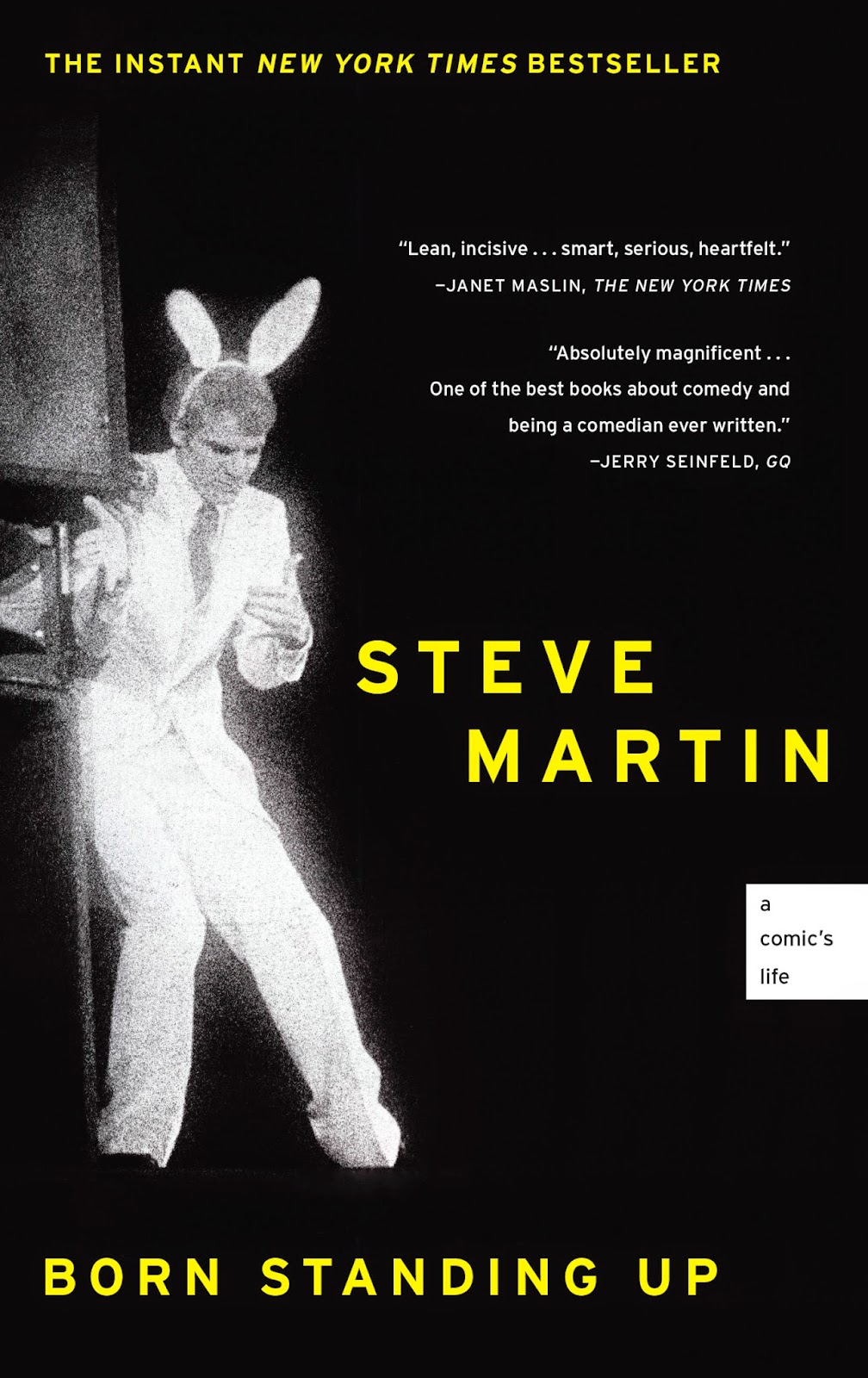
Monday, May 18, 2015
Twin Peaks Series Finale

writers: Mark Frost, Harley Peyton, Robert Engels, David Lynch (uncredited)
director: David Lynch
Astro City Vol. 2: Confession

collects Astro City (Vol. 2) #1/2, originally published Nov 1997, and #4-9, originally published Oct 1996-Mar 1997
Mad Men Series Finale

Episode Title: "Person to Person"
writer: Matthew Weiner
director: Matthew Weiner
Saturday, May 16, 2015
The Sun Also Rises (Audiobook)

read by William Hurt
on Amazon's 100 Books to Read in a Lifetime
Thursday, May 14, 2015
Daredevil: The Man Without Fear

collects Daredevil: The Man Without Fear, published Aug 1993-Dec 1993
#3 on CBR's list of best Daredevil comics
Tuesday, May 12, 2015
The Incredible Hulk

"Norton and Marvel publicly tussled over The Incredible Hulk's final cut, with Norton arguing for a longer, more character-focused film. But it's hard to see how a piece of greater depth could have emerged from material that hones in on and largely finds a zone of happy competence. It delivers the goods and waits for fans to sign the receipt." -Keith Phipps
Monday, May 11, 2015
21 Up

"'The child is father of the man,' Wordsworth wrote. That seems literally true as we look at these films. The 7-year-olds already reveal most of the elements, good and bad, that flower in later life. Sometimes there are surprises; a girl who is uptight and morose at 21, vowing never to marry, blossoms in the later films into a cheerful wife and mother." -Roger Ebert
Sunday, May 10, 2015
Kurt Cobain: Montage of Heck

"Generally speaking, the documentary is strongest when Morgen’s voice comes through the loudest, rather than Cobain’s. The first 30 minutes or so, set before Cobain grew up and pursued a more serious interest in music, are the film’s most affecting, because Morgen folds the beginning and the end of his life together so powerfully. While clips of Cobain and Love’s domestic life provide a fascinating look at their chaotic dynamic, as well as their relationship with the press and with their infant daughter Frances Bean, they don’t have the same associative punch. Nonetheless, Montage Of Heck is more than just a energetic tribute to a great, troubled artist—it’s an affirmation of film’s specific power to communicate more than words on a page ever could. It’s a visceral biography." -Scott Tobias
Saturday, May 9, 2015
What We Do In The Shadows

"Waititi and Clement bring to the material the same deadpan, straight-faced sensibility that paid such rich dividends in Flight Of The Conchords. What We Do In The Shadows also resonates as an eminently re-watchable hang-out movie, filled with characters, scenes, and gags worth revisiting, assuming audiences survive the dangerous but ultimately delightful company." -Nathan Rabin
Friday, May 8, 2015
7 Plus Seven

"[The Up Series] also strike me as an inspired, even noble, use of the film medium. No other art form can capture so well the look in an eye, the feeling in an expression, the thoughts that go unspoken between the words. To look at these films, as I have every seven years, is to meditate on the astonishing fact that man is the only animal that knows it lives in time." -Roger Ebert
Thursday, May 7, 2015
7 Up!

"Every seven years, the British director Michael Apted revisits a group of people whose lives he has been chronicling since they were children. As he chats with them about how things are going, his films pentrate to the central mystery of life, asking the same questions that Wim Wenders poses in "Wings of Desire": Why am I me and why not you? Why am I here and why not there?" - Roger Ebert
Monday, May 4, 2015
Life Itself

#6 on Dissolve's best films of 2014
"After multiple cancer surgeries left critic Roger Ebert disfigured and voiceless in the last years of his life, he not only refused to retreat from public life, he became more ferociously engaged than ever before. His memoir Life Itself reflected this renewed spirit, and Steve James’ documentary of the same name goes deeper still. The film alternates between contemporary scenes of Ebert and his wife Chaz spending time in and out of hospitals and rehab, and a look back at a life so full of adventure, it’d take a man with Ebert’s imagination to make it up. Life Itself takes a long, bittersweet look at a Chicago and newspaper world that has long since vanished, tackles Ebert’s alcoholism head-on, and offers a love story for the ages through Ebert’s soul-affirming marriage to Chaz. It’s a film of wit and uncommon candor that captures all the seasons of Ebert’s life, from the precocious college kid ruling the student newspaper to Ebert’s partnerships with Russ Meyer and Gene Siskel to his coronation as one of our most important and influential thinkers as a Pulitzer Prize winner. Candid, affectionate, and deeply moving, Life Itself is Ebert’s final gift to a world from which he both took and gave so much." -thedissolve.com
13 Assassins

"Though 13 Assassins’ setup could stand some tightening, it’s all necessary prelude to a spectacular, action-packed final hour where all hell breaks loose and the streets and rooftops flow with blood. Facing a severe disadvantage, with Inagaki’s hundreds against their 13, Yakusho and his men create some leverage through an ingenious series of booby traps and other elaborate feints. The mayhem that results isn’t a surprise from a filmmaker of Miike’s reputation—though he handles it with more aplomb than usual—but what is surprising about 13 Assassins is how far it goes in upending the samurai picture. In Miike’s mind, there’s nothing honorable about the thoughtless commitment to honor and code, especially if it means protecting dastardly men who don’t deserve that kind of loyalty. With 13 Assassins, he’s made a film both punk and moral." -Scott Tobias
Sunday, May 3, 2015
Holy Motors

“In this competition,” Cannes jury president Nanni Moretti said after awarding Amour the Palme D’or in 2012, “the filmmakers seemed more in love with their style than with their characters.” This, it was widely felt, was Moretti’s thinly veiled explanation for leaving Leos Carax’s Holy Motors, strongly favored during the festival to claim the top prize, without any award at all. It’s only been three years, but history has already proven Moretti wrong. Holy Motors is a dazzling film, and perhaps its radical sprawl was too much to take in amid the mad rush of Cannes. But from the present vantage, it seems clear that the film is no mere exercise in style. Carax confronts film’s demise with an intensity that in its own way fights valiantly against it, acknowledging the medium’s obsolescence while inarguably proving its worth. In part, that means adopting the language of new media: the fractured, drip-feed format of the YouTube video, flipped through like channel surfing, always poised to deliver another fix. At first blush, Holy Motors seems like a film with an identity crisis—a family drama one moment, a murder-mystery the next. On their own, the vignettes are sublime, each in turn an exhilarating bout of pure cinema. (A mid-film plunge into accordion-led rock opera, in particular, is among the most purely delightful sequences in recent film history.) But the cumulative effect is what counts. Death hangs over these proceedings, however occasionally ecstatic the register. It’s apparent from an early shot of an audience of corpses in the cinema that Holy Motors is concerned with the death of film. What emerges by the end is a deeper fixation: the death of us all. Mortality has never before been reckoned with so vigorously. —Calum Marsh
Wednesday, April 29, 2015
Snowpiercer

#12 on Dissolve's best films of 2014
"For a while, it looked as if Harvey Weinstein might force Korean filmmaker Bong Joon-ho to release a truncated version of his highly anticipated fifth feature. Bong won that battle, thankfully, but it’s a wonder that such a demented vision, requiring a fairly sizable budget, ever got made in the first place. There’s no subtlety to Snowpiercer’s dystopian near-future, in which what little is left of humanity endlessly rides a mammoth super-train around the frozen Earth, with the elite living it up in the front cars and the huddled masses surviving on roach-gelatin at the rear. Unlike last year’s dreary Elysium, however, Bong’s adaptation of an obscure French graphic novel has manic fun with its grim premise, from Tilda Swinton’s grotesque parody of an entitled twit to the way each successive compartment on the train, moving forward, is more opulent and eye-popping than the last. Given the ever-widening gulf between rich and poor in many ostensibly first-world countries (e.g., America), perhaps there’s no better way to address the problem than by pushing it to such a ludicrous extreme. Certainly there’s no more entertaining way." -thedissolve.com
Tuesday, April 28, 2015
Battle Royale

"Battle Royale is many things at once: A grand metaphor for the cruel cliques and hierarchies that govern teenage life; a statement about the chasm between the older and younger generations; a rebellious salvo against fascism and government control; and a stinging, no-holds-barred action film that's like manga come to life. Watching 15-year-olds savagely murder other 15-year-olds sounds irredeemably perverse as entertainment, like The Running Man for kidz. But because the whole situation is so thoroughly couched in metaphor—and because Fukasaku aligns himself so strongly with the youth—the film remains surprisingly palatable, even fun, because there are only abstract ideas connecting what happens in the film to reality. Elephant this ain't." -Scott Tobias
Sunday, April 26, 2015
Akira

"In spite of its increasingly daring and experimental visual stylings, the Japanese animation industry has yet to produce a film that truly rivals Katsuhiro Otomo's much-heralded animated film adaptation of his 2,000-page comic book Akira. The 1988 cyberpunk extravaganza—in which a weak, put-upon biker punk named Tetsuo is suddenly endowed with phenomenal psychic powers, and uses them to exact violent retribution on any and all perceived authority figures—certainly has its problems...But the film itself is a landmark production that can be watched with equal satisfaction as a metaphorical psychodrama or as a sheer visual spectacular." -Tasha Robinson
Spirited Away

#6 on AV Club's best films of the '00s
"Much of what is great about Spirited Away defies description and simply must be experienced. My favorite passage finds Chihiro straying farther off course than she has in the entire movie, all in an effort to restore health to the badly wounded Haku by appealing to Yubaba’s kindly twin Zeniba. She boards a train that glides along on the surface of the ocean outside the bathhouse, traveling all the way to the last stop with her friendly companions in tow. There’s something so melancholy and beautiful about these lonely, transparent spirits on the train, heading to whatever destination the afterlife has determined for them. I can’t explain what it means or why it’s so affecting, but I don’t know if I’ve ever seen a children’s film strive for such a oddly transcendent tone. There are no words." -Scott Tobias
Friday, April 17, 2015
St. Vincent
Theodore Melfi, 2014
"St. Vincent concludes with a sequence of Bill Murray singing along to Bob Dylan’s “Shelter From The Storm” on a Walkman. (The scene was released online as an inducement to see the movie.) In this lovely moment, Murray is liberated from the plot’s cornball demands and the film’s sticky sentimentality, and is free to just exist. It’s far and away the film’s best moment, and it makes everything before it seem even more contrived and unnecessary by comparison. Anyone who has watched that sequence online has already seen the best St. Vincent has to offer, and could only be let down by the crowd-pleasing phoniness of the rest." -Nathan Rabin
"St. Vincent concludes with a sequence of Bill Murray singing along to Bob Dylan’s “Shelter From The Storm” on a Walkman. (The scene was released online as an inducement to see the movie.) In this lovely moment, Murray is liberated from the plot’s cornball demands and the film’s sticky sentimentality, and is free to just exist. It’s far and away the film’s best moment, and it makes everything before it seem even more contrived and unnecessary by comparison. Anyone who has watched that sequence online has already seen the best St. Vincent has to offer, and could only be let down by the crowd-pleasing phoniness of the rest." -Nathan Rabin
Wednesday, April 15, 2015
Tales of Suspense #39: Iron Man Is Born!

originally published in March 1963
#9 on CBR's list of best Iron Man comics
Monday, April 13, 2015
Iron Man

"Iron Man takes its sweet time getting Downey into the Iron Man suit, and it doles out big action setpieces sparingly once man has fused triumphantly with machine. Downey is so much fun as a breezy cad that it's a shame he spends so much time brooding and luxuriating in obsession. Like Ang Lee's Hulk, Iron Man is a comic-book blockbuster characterized as much by heavyweight acting and sober intellectual concerns about the use and misuse of power and technology as the usual comic-book foolishness. But Iron Man finds a much more palatable, audience-friendly balance between delirious spectacle and tortured introspection thanks largely to Downey, a great actor who's also a great entertainer." -Nathan Rabin
The
Marvel Cinematic Universe is such an omnipresent part of popular
culture at this point that it’s easy to forget how much time has passed
since the first Iron Man; seven years. As well as the film
holds up, and as fun as it still is, it’s also very much a product of an
era that’s already fading away. In the opening scene, a soldier asks to
take a selfie with Robert Downey Jr.’s Tony Stark. But he doesn’t call
it a selfie. And he takes it with a digital camera instead of his cell
phone. And Tony Stark’s cell phone has a flip-up screen. And he makes
jokes about not wanting to see the pictures on MySpace. This Iron Man
belongs to another world; one that’s clearly defined by the period
after 9/11. He’s not fighting Norse gods or sentient robots; his enemies
are Middle Eastern terrorists and war profiteers.
Some of the dialogue might be dated, but the effects in this movie still look great; I was impressed how cool the early scenes of Tony Stark testing his Iron Man suit and flying around still are. The visceral thrill of discovery and the pure freedom of flight pulse through the first two acts of the movie. A lot of the credit for the film’s success belongs to Downey, who makes Tony Stark so charming and likable, even in the early scenes when he’s a pompous, unreliable d-bag. Tony Stark has a real arc here too, and not just the reactor kind; his evolution from unfeeling capitalist to selfless hero progresses naturally and satisfyingly through his story.
Read More: The Ultimate Marvel Marathon 2015 Live-Blog | http://screencrush.com/the-ultimate-marvel-marathon-2015-live-blog/?trackback=tsmclip
Some of the dialogue might be dated, but the effects in this movie still look great; I was impressed how cool the early scenes of Tony Stark testing his Iron Man suit and flying around still are. The visceral thrill of discovery and the pure freedom of flight pulse through the first two acts of the movie. A lot of the credit for the film’s success belongs to Downey, who makes Tony Stark so charming and likable, even in the early scenes when he’s a pompous, unreliable d-bag. Tony Stark has a real arc here too, and not just the reactor kind; his evolution from unfeeling capitalist to selfless hero progresses naturally and satisfyingly through his story.
Read More: The Ultimate Marvel Marathon 2015 Live-Blog | http://screencrush.com/the-ultimate-marvel-marathon-2015-live-blog/?trackback=tsmclip
The
Marvel Cinematic Universe is such an omnipresent part of popular
culture at this point that it’s easy to forget how much time has passed
since the first Iron Man; seven years. As well as the film
holds up, and as fun as it still is, it’s also very much a product of an
era that’s already fading away. In the opening scene, a soldier asks to
take a selfie with Robert Downey Jr.’s Tony Stark. But he doesn’t call
it a selfie. And he takes it with a digital camera instead of his cell
phone. And Tony Stark’s cell phone has a flip-up screen. And he makes
jokes about not wanting to see the pictures on MySpace. This Iron Man
belongs to another world; one that’s clearly defined by the period
after 9/11. He’s not fighting Norse gods or sentient robots; his enemies
are Middle Eastern terrorists and war profiteers.
Some of the dialogue might be dated, but the effects in this movie still look great; I was impressed how cool the early scenes of Tony Stark testing his Iron Man suit and flying around still are. The visceral thrill of discovery and the pure freedom of flight pulse through the first two acts of the movie. A lot of the credit for the film’s success belongs to Downey, who makes Tony Stark so charming and likable, even in the early scenes when he’s a pompous, unreliable d-bag. Tony Stark has a real arc here too, and not just the reactor kind; his evolution from unfeeling capitalist to selfless hero progresses naturally and satisfyingly through his story.
Read More: The Ultimate Marvel Marathon 2015 Live-Blog | http://screencrush.com/the-ultimate-marvel-marathon-2015-live-blog/?trackback=tsmclip
Some of the dialogue might be dated, but the effects in this movie still look great; I was impressed how cool the early scenes of Tony Stark testing his Iron Man suit and flying around still are. The visceral thrill of discovery and the pure freedom of flight pulse through the first two acts of the movie. A lot of the credit for the film’s success belongs to Downey, who makes Tony Stark so charming and likable, even in the early scenes when he’s a pompous, unreliable d-bag. Tony Stark has a real arc here too, and not just the reactor kind; his evolution from unfeeling capitalist to selfless hero progresses naturally and satisfyingly through his story.
Read More: The Ultimate Marvel Marathon 2015 Live-Blog | http://screencrush.com/the-ultimate-marvel-marathon-2015-live-blog/?trackback=tsmclip
Sunday, April 12, 2015
Civil War

collects Civil War #1-7, originally published May 2006-November 2006
Saturday, April 11, 2015
Fraction Iron Man Vol. 2: World's Most Wanted Part 1

collects Invincible Iron Man #8-13; published December 2008-May 2009
#6 of CBR's list of best Iron Man comics
takes place immediately after Secret Invasion (2008-2009)
introduces "Rescue" suit; features appearances from War Machine, Sub-Mariner, The Controller.
Thursday, April 9, 2015
Fraction Iron Man Vol. 1: The Five Nightmares

collects Invincible Iron Man #1-7; published May 2008-November 2008
#8 of CBR's list of best Iron Man comics
takes place after Civil War (2006-2007), immediately before Secret Invasion (2008-2009)
introduces Ezekiel Stane, Sasha Hammer
Sunday, March 29, 2015
Lost In Translation

editor: Sarah Flack
cinematography: Lance Acord
"Adrift in an unfamiliar place, two lonely people find each other. It's an old story, but Sofia Coppola's stunning second feature makes the developing relationship between stars Bill Murray (as a past-his-prime movie star scoring a quick buck shilling for Japanese whiskey) and Scarlett Johansson (as a young woman trying to find out how she fits in the world) feel as unpredictable as the sights and sounds of its bustling Tokyo streets. Their encounter is brief, but has any film better captured how a few in-between days can put life in focus?" -Keith Phipps
Monday, March 23, 2015
Her

editors: Eric Zumbrunnen, Jeff Buchanan
cinematography: Hoyte van Hoytema
Like a lot of great science fiction, Spike Jonze’s Her uses the future to articulate the present more profoundly than wholly contemporary films could. No film of the last five years has better defined the relationship people have with technology and each other, and few have been as insightful about the mysteries of the heart, and how lovers connect and drift apart. In Her, the affair happens between Theodore Twombly (Joaquin Phoenix), a high-waisted writer still reeling from a divorce, and a computer operating system named Samantha (Scarlett Johansson). That relationship gives Her a novel gimmick that Jonze makes utterly plausible. He’s aware that it’s a leap for audiences to buy into an affair between a man and an OS, and he finds small ways to make it easier, from Theodore’s funny, embarrassed self-awareness to Johansson’s voice, which has its own vivid associations. There’s a flirty intimacy to their conversations that reflects the bonds people can make over IM or email exchanges.
It would be enough for Jonze to show the modern appeals of a virtual relationship, of being able to love a compliant, responsive, fully customizable mate instead of a thornier, non-virtual one. But Her doesn’t stop there. The phenomenon it ultimately expresses, with heartbreaking insight, is the trajectory of a doomed relationship—how people (and the Operating Systems that represent them) are constantly changing, and sometimes evolve past each other. Jonze has made a break-up film that doubles as a capsule-worthy snapshot of how we live today, when technology has torn down some barriers and erected others that are difficult to scale. The quest for a real, human moment is movie-long, but Her doesn’t lack warmth or feeling. It simply finds it, like Theodore, in surprising, unconventional places. —Scott Tobias
Subscribe to:
Posts (Atom)